
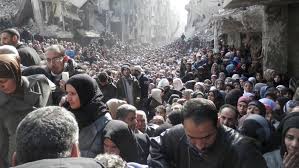

Syria is one of the oldest and most culturally rich countries, with various cultures and peoples from different sects and castes. It has been captured and conquered multiple times by Muslims and Arab semi-nomadic tribes in the early age of Islam, such as in 636. It holds significant importance in terms of religious sites and history, eventually becoming the Syrian Arab Republic. Located east of the Mediterranean Sea in Western Asia, Syria has a history similar to Afghanistan’s, particularly in terms of local terrorism, civil wars, terrorist groups, and other anti-government actors who exhibit Islamic fundamentalist tendencies. These groups seek power, oppose secularism, and advocate for an Islamic state.
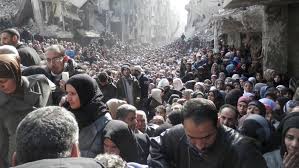
In Syria, the civil war began when the Sunni Islamic militant group HTS (Hay’at Tahrir al-Sham) emerged in 2011, launching anti-government slogans and uprisings against Assad’s regime. The group was backed by Saudi Arabia, the United States, Turkey, and other Western countries. HTS was inspired by fundamental pro-Islamic principles and led by figures such as Ahmed Al-Sharaa, Fateh al-Sham, Nour al-Din, and Jaysh al-Sunna.
The civil war has had numerous consequences for the Syrian people, including widespread displacement, economic devastation, military weakness, and the destruction of roads, schools, colleges, homes, and shelters. Approximately 6.7% of the population has been displaced internally, seeking refuge in safer areas, while 8.7% have fled to neighboring countries. Nearly 500,000 people have lost their lives in the conflict. The economy has collapsed by about 70%, and the poverty rate has increased by 80%.
Public health has also been severely affected by the use of gunpowder and other dangerous chemicals employed by militants and the military. The people of Syria have suffered physically, mentally, and psychologically. Child labor increased as children were forced to work for daily wages to support their families. This, in turn, severely impacted their education and basic needs. The population has become deeply depressed, with many losing hope, desire, and a sense of security.
Russia has provided military and economic assistance to the government in an effort to stop HTS violence and restore peace and order to the country. In 2015, Russia’s military intervention helped turn the tide of the war in favor of the Syrian government, offering short-term stability. Iran also sent military advisors to assist the Syrian army, while China provided drones and artillery systems. Both Russia and Iran supported Syria in the international community, using their votes in the UN Security Council to block resolutions condemning Assad’s government. Both countries have called for a peaceful resolution to the conflict and have legitimized Assad’s government.
The main reasons behind the civil war were opposition to Assad’s regime, with demands for reforms and economic development. The government’s response was harsh, labeling the opposition as rebels and initiating a violent crackdown. Initially, the opposition was supported by Muslim countries and the United States, which provided arms, funding, and training to the militants from 2018 to 2019. Meanwhile, Russia, Iran, and China provided initial support to the government in its efforts to crack down on militants, particularly ISIS and HTS.
In 2014, ISIS and other jihadist groups expanded their influence, eventually declaring a caliphate. At the same time, the United States launched airstrikes against ISIS, and about 15 million Syrians were displaced to neighboring countries. The government was weakened, unable to control the situation, and protests and unrest continued. Finally, Assad’s regime collapsed on December 8, 2024, after HTS took over.
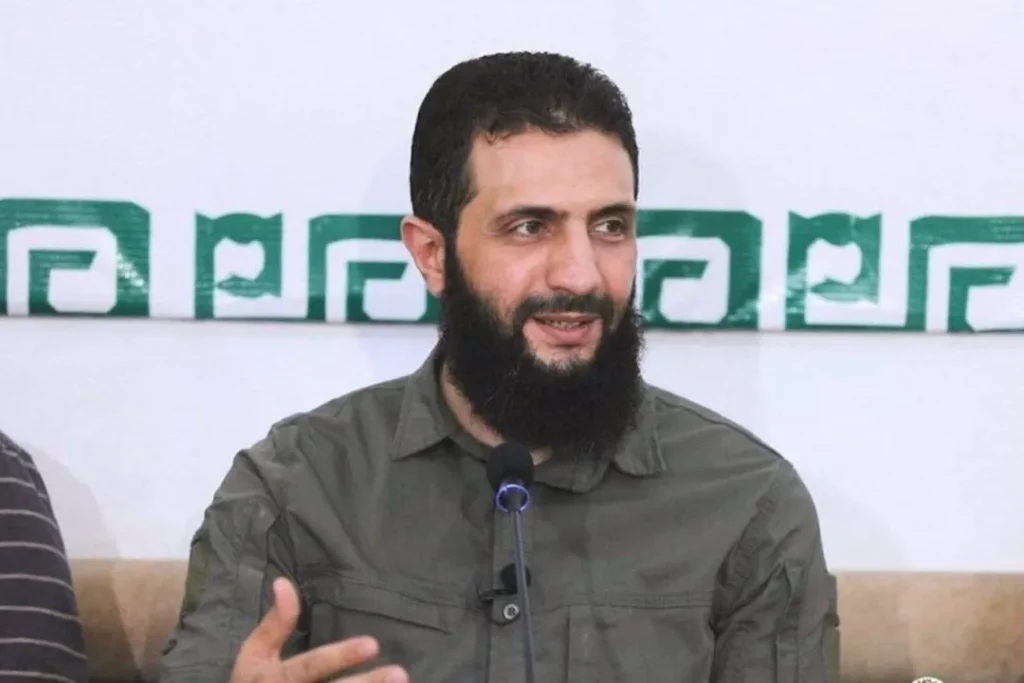
The traitor leader, Ahmad Al-Sharaa, in a recent interview, stated that in the coming four years, they will hold elections and begin a democratic system. Moreover, he suggested amending the current constitution and expressed hope for forming a new one. He further mentioned his intention to resolve issues with the Syrian Democratic Forces through peaceful dialogue. The Muslim communities have an ethical and emotional obligation to help establish a peaceful and healthy democracy in Syria.


Really Good 😊 Keep it up 💯
Same treatment of syria like Afghanistan by the hands of USA.
same angle but different subjects(USA)
Very helpful
Syrians must og to install strong and healthy democracy in order to maintain public opinions.
hfi aQF EZx Ctk